
May 15, 2026
Fewer boxes, better meetings
When we designed RoomHub, we kept asking ourselves the same question: how many things on the wall is too many?
Most meeting rooms today are crowded. There's a touchscreen for the calendar, a separate codec under the table, two or three microphones, a soundbar, sometimes a small server rack hiding in a cabinet. Each of those boxes was a perfectly reasonable choice somewhere along the way - but together they make rooms harder to support, harder to use, and harder to upgrade.
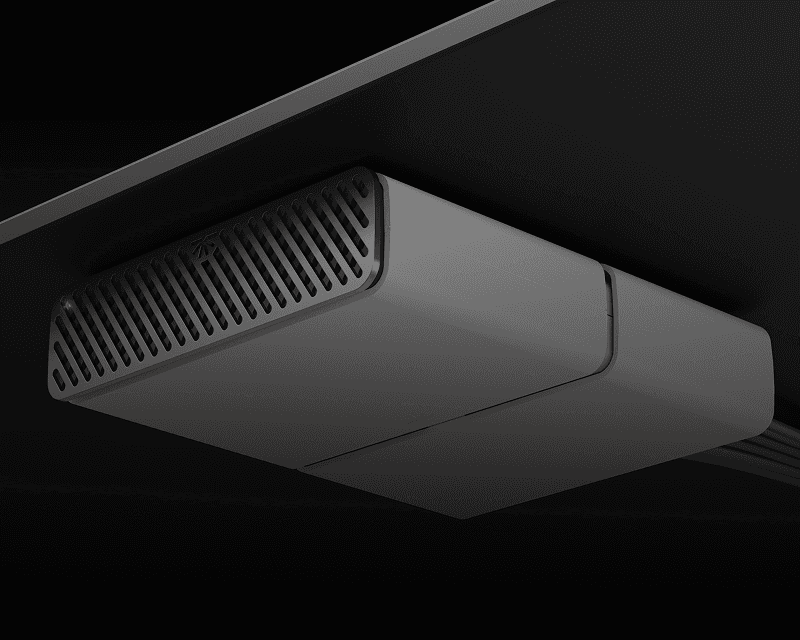
We started RoomHub from the opposite end: one device that handles audio capture, processing, codec, and amplification.
Not because integration looks elegant on a spec sheet, but because every cable and every additional box is a place where something can fail at the worst possible time.
The trade-offs were real. Bringing everything into one chassis meant we couldn't take shortcuts on the DSP. We rebuilt the beamforming algorithms from scratch so a single ceiling mount could cover rooms that previously needed three or four pickup zones. We oversized the amplifier so the same device that runs a four-person huddle space can run a twenty-person boardroom without an upgrade path that involves new hardware.
There's a quieter benefit to this approach that's harder to put in a spec sheet: the room becomes easier to forget. When everything just works — when calls connect, when remote participants are heard clearly, when no one has to walk around the table tapping a Bluetooth puck - people stop thinking about the room. They start thinking about the meeting.
That's the part we're proudest of. RoomHub isn't trying to be the centerpiece of the space. It's trying to disappear.
R&D